




Advertisement
From September 2026, workers from additional countries will be eligible for eight in-demand roles in social services, food services, and air transport under Singapore’s work permit scheme. The move is aimed at giving employers greater flexibility in filling positions where local manpower is insufficient.
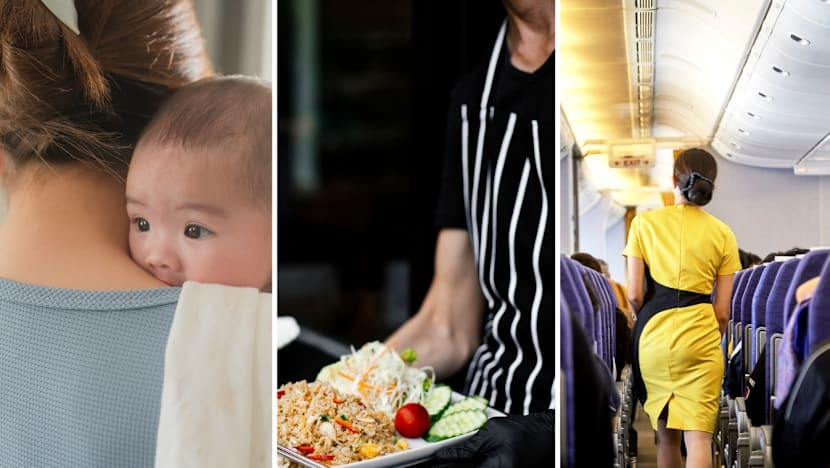
The occupations now open to work permit holders from non-traditional source countries include babysitters or infant caregivers, educarers and teacher aides; food preparers such as butchers and fishmongers, kitchen assistants, food or drink stall assistants, and waiters; as well as cabin crew.
The list of eligible source countries includes Bangladesh, Bhutan, Cambodia, India, Laos, Myanmar, the Philippines, Sri Lanka, and Thailand. Traditionally, Singapore has relied on workers from Malaysia, China, Hong Kong, Macau, South Korea, and Taiwan for manufacturing and services roles.
According to the Ministry of Manpower (MOM), the policy expansion will help firms retain foreign workers displaced by an upcoming increase in the S Pass qualifying salary. From 2027, new S Pass applicants will need to meet a higher qualifying salary of S$3,600, up from the current S$3,300, with renewals following suit in 2028. The qualifying salary is benchmarked against the top one-third of local associate professional and technician wages. By 2030, the threshold is expected to rise to S$4,000 to S$4,500.
The Employment Pass qualifying salary will also increase from S$5,600 to S$6,000 from 2027 for new applicants, with renewals in 2028. Raising these thresholds aims to better target higher-skilled roles while allowing employers to retain valued workers who may not meet the S Pass criteria.
Industry groups have welcomed the move. The Restaurant Association of Singapore said the expansion gives food and beverage operators access to a broader and more diverse talent pool, providing much-needed manpower flexibility while maintaining fair wages. The association also noted ongoing challenges, including restrictions on shifting workers between S Pass and non-traditional source quotas, which remain separately governed within the overall Dependency Ratio Ceiling.
Since 2023, the MOM has maintained a list of non-traditional sources for work permit holders to help employers fill roles that are difficult to automate or where local uptake is low. Existing roles on the list include hotel housekeepers, porters, cooks, food processing workers, and heavy vehicle drivers. Employers hiring from these sources must offer a minimum monthly salary of S$2,000 and keep such workers within an 8 percent sub-quota to protect local wages and ensure higher-quality hires.
The expanded work permit framework reflects Singapore’s ongoing efforts to balance workforce needs, support businesses, and maintain employment opportunities for locals, while giving companies a wider choice of skilled workers in critical sectors.
 Watch AD Unlock More
Advertisement


Advertisement


Advertisement


Advertisement