




Advertisement
For something so universal, greying remains oddly mysterious. Each strand of hair starts out nearly translucent, and its colour is determined by melanin — essentially pigment dust. Pack it densely, and you get dark hair. Leave only a few black and brown specks, and it appears blonde.
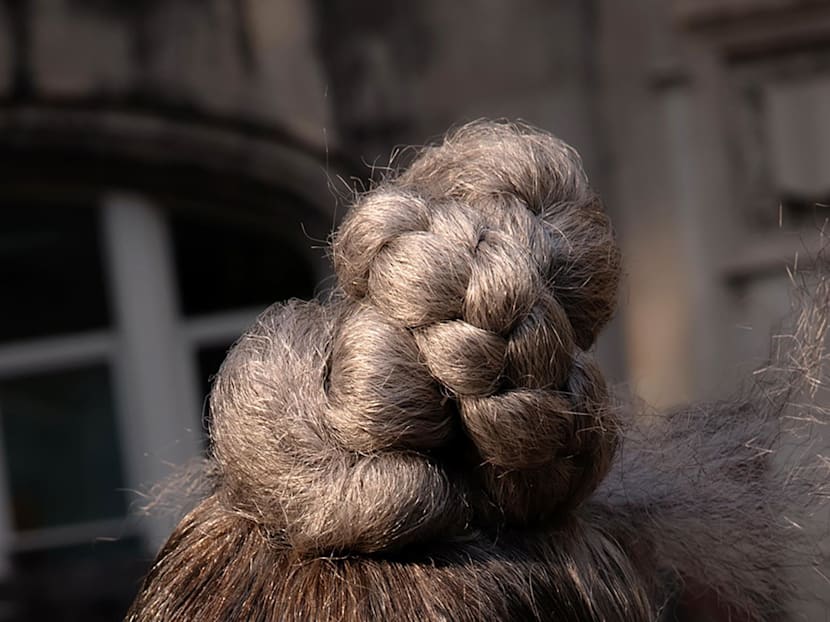
Over time, the pigment-producing cells in each hair follicle tend to slow down or shut down, turning hair grey. These strands tend to be stiffer, harder to control, and grow about 10 per cent faster than pigmented hairs. Some people embrace them as a natural part of ageing; others see them as a nuisance to be dyed, plucked, or hidden.
But scientists are still not entirely sure what sets greying in motion — or how much control we truly have over it. People can begin greying in their 20s or keep their natural colour well into their 80s. And while the process seems largely irreversible, researchers are finding that colour can sometimes return — in patches and in darker roots.
For now, there is no silver bullet to prevent or reverse greying. But experts are working to untangle the biology behind it.
What do scientists know so far?
Our hair does not grey all at once. You might notice stray silver strands first, then a salt-and-pepper phase. Some hairs can even get lighter and darker again over time.
Each follicle is an independent unit, containing its own pigment-producing cells — called melanocytes — and a reservoir of replacement stem cells. As we age, these cells naturally accumulate damage from stress and cellular wear and tear. Hair greying usually starts when melanocytes in a particular follicle become compromised. But it becomes permanent when the stem cell reservoir is exhausted.
There is research to suggest that if the first process happens without the second, grey hair can be reversed. In a small 2021 study, scientists collected hairs from people who had started greying and found distinct dark and white bands. Because hair grows roughly one centimetre per month, these bands offered a timeline. Participants charted their stressful experiences over the past year — and periods of higher stress lined up with lighter bands, while lower-stress periods corresponded with bands where colour returned. In other words, dialling down stress appeared to reverse or slow greying.
Some people with grey hair have also spontaneously repigmented in patches after receiving certain types of chemotherapy, radiation, or immunotherapy. Experts suspect that, in these rare cases, the cancer treatments might coax dormant stem cells to rebuild functional melanocytes.
This research suggests that greying is not a completely linear process — and that there is a "window of opportunity" where pigment loss can be reversed. How long that window stays open, and what could safely reawaken stem cells, is still unclear.
What can you actually do about grey hair?
Much of hair greying is genetic, so your parents and grandparents offer the best insight. Researchers have also found that greying typically starts in the mid-30s for white people, late 30s for Asian people, and mid-40s for Black people.
But lifestyle choices might also make a difference. The strongest evidence points to quitting cigarettes and reducing stress levels. Getting enough sleep and eating a healthy diet — with plenty of antioxidants — might also limit damage to pigment cells, though the evidence there is more indirect.
Premature greying has also been linked to low levels of iron and vitamin B12, but in most developed countries, deficiencies severe enough to affect hair pigmentation are rare. And there is no strong evidence that supplements help with greying.
Be cautious about anti-grey supplements overall, since they are often sold on promise rather than proof. Even if they contain something potentially helpful, there is no evidence that taking a pill or applying a cream reaches the pigment cells deep inside hair follicles.
When to see a doctor
Although there are no medical treatments for grey hair, it is worth speaking to a doctor if you experience sudden or early greying. A small share of cases are linked to prescription medications or underlying conditions — and these may be reversible.
For example, some antiseizure medications, antimalarials, oral retinoids, and muscle spasticity drugs have been linked to greying. Many cancer drugs can also induce pigment loss, despite the rare cases of repigmentation.
Doctors can also distinguish between age-related greying and conditions that cause it. Thyroid and other hormonal disorders have been linked to early greying, as have autoimmune conditions that target hair follicles, such as vitiligo and alopecia areata. In those cases, appropriate care can limit further pigment loss and sometimes allow colour to return.
The bottom line
For most people, there is not much you can do to prevent grey hair. But stacking small changes — managing stress, eating well, sleeping enough, and avoiding smoking — can help. As one dermatologist puts it: "It's not anything crazy — it's just living a healthy lifestyle."
 Watch AD Unlock More
Advertisement


Advertisement


Advertisement


Advertisement