




Advertisement
Eclectic interior design is the art of deliberate mixing — combining furniture, colours, and eras from different design traditions into one cohesive home. Unlike matching showroom sets, this style feels curated and personal. It works particularly well in Singapore's HDB flats and condos, where homeowners often inherit furniture, collect travel souvenirs, or simply want a home that tells their own story rather than following a single trend.
Done right, eclectic design feels intentional and balanced, not chaotic or cluttered. This guide covers the key principles, practical steps, room-by-room ideas, and cost considerations for achieving the look in your Singapore home in 2026.
1. What Is Eclectic Interior Design? Key Principles
Eclectic interior design is built on mixing rather than matching. Instead of following one design tradition, you combine pieces from different eras, cultures, and price points into a single cohesive room. The skill lies in the word "curated" — every item earns its place through purpose and connection, not simply by being different for the sake of it.
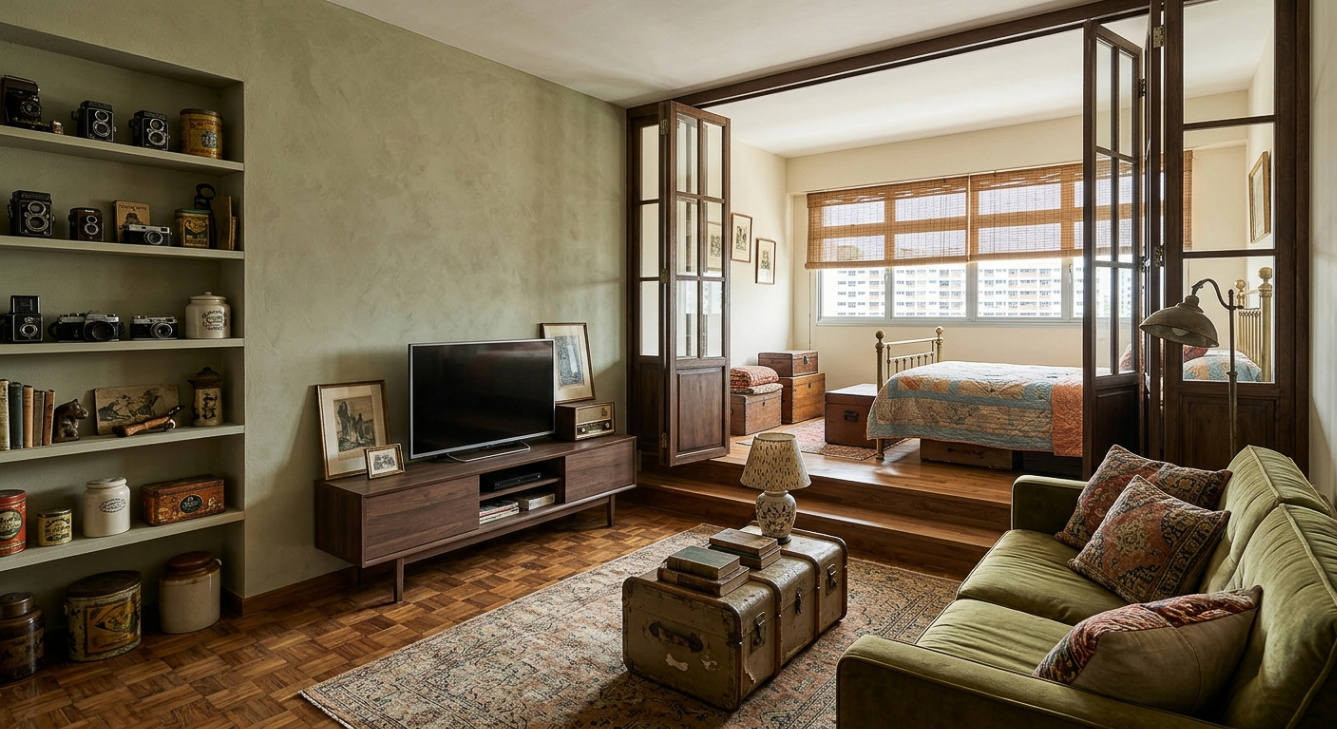
This differs from maximalist design, which focuses on abundance and pattern density. Eclectic design can be busy or restrained, but it always relies on an underlying structure — a consistent colour palette, a repeated material, or a unifying theme like travel, art, or vintage finds.
In Singapore, eclectic design has grown popular among homeowners who:
Inherit furniture from family members
Collect art or objects during travels
Dislike the uniformity of matching furniture sets
Want a home that reflects multiple facets of their personality
2. How to Achieve an Eclectic Look in Singapore Homes
Start with a neutral base — walls, flooring, and major furniture like sofas should stay in neutral tones so your bolder, mismatched pieces can stand out. In a 3-room or 4-room HDB flat, this restraint matters even more, since limited space can look chaotic if every surface competes for attention.
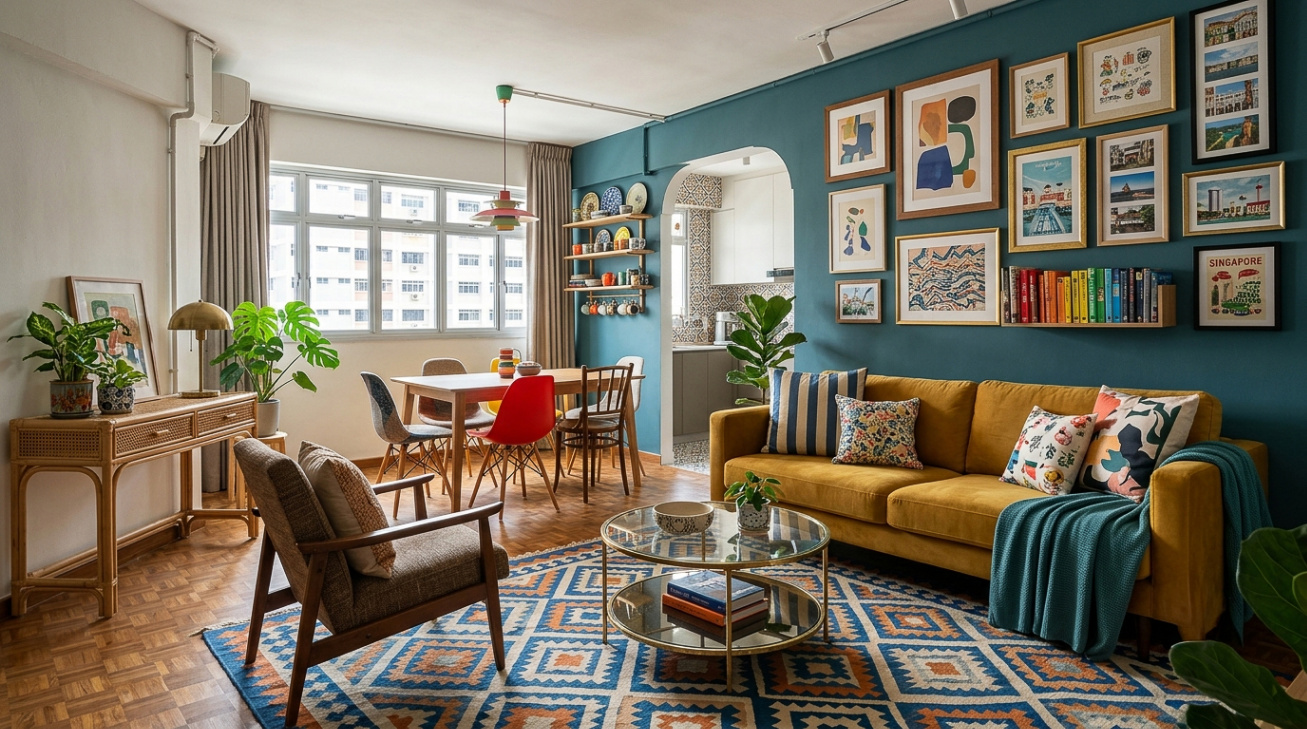
Choose a unifying thread — this could be a colour that repeats across three or four items, a shared material like brass or rattan, or a consistent scale of pattern. Repetition is what separates eclectic from simply cluttered.
Use area rugs to define zones — for condos with open-concept living and dining areas, rugs anchor each seating area and keep the mix intentional.
Incorporate vintage and secondhand pieces — local flea markets, estate sales, and online marketplaces are excellent sources for one-off furniture that gives a room genuine character without the cost of custom pieces.
3. Key Elements: Colour, Pattern Mixing, Furniture & Accessories
Colour — Start with a neutral base (white, grey, or beige) and repeat two or three accent colours across cushions, art, and small furniture. This keeps a busy mix of styles from feeling overwhelming.
Pattern mixing — Works best when you vary the scale. Pair a large-scale print (like a bold rug) with smaller-scale patterns (like striped cushions or patterned ceramics). Keep at least one plain surface nearby — a solid-colour sofa gives the eye a place to rest.
Furniture — Span different eras deliberately. A mid-century modern chair can sit comfortably beside a rattan console and a contemporary glass coffee table, provided the colours and proportions relate to one another.
Accessories — This is where eclectic design truly comes alive. Gallery walls with mismatched frames, layered textiles, and travel souvenirs all add personality. Group similar-coloured or similar-themed items together so the display reads as curated rather than random.
Room-by-Room Eclectic Design Inspiration
3-Room HDB: Focus your eclectic mix on the living room only. A vintage armchair, a modern sofa, and a patterned rug give you variety without overwhelming a compact layout.
4-Room HDB: Extend the mix into the dining area with mismatched chairs around a single cohesive table. Choose chairs in different styles but similar heights and a shared colour tone for visual balance.
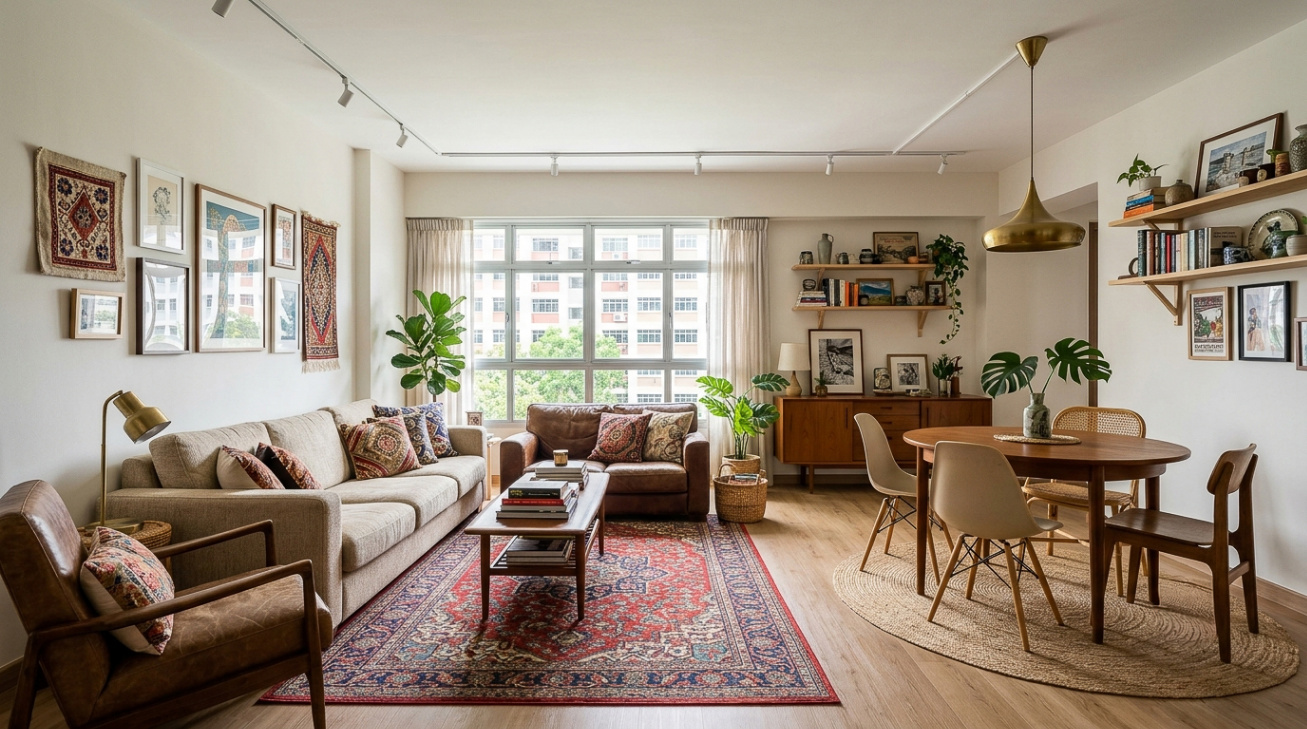
5-Room HDB & Condo: Larger spaces allow for a full gallery wall, a mixed-era seating arrangement, and a statement pendant light. These homes can support more visual variety since there's enough negative space to let each piece breathe.
Condo Study or Reading Nook: Combine a vintage armchair, a contemporary reading lamp, and a well-loved rug to create a cosy, personal corner that still fits the home's overall colour scheme.
Singapore-Specific Considerations
Humidity affects vintage wood — check joints and finishes carefully before buying secondhand furniture, and consider a protective treatment for solid wood pieces to withstand Singapore's climate.
Small-space optimisation — multi-functional furniture (e.g., a vintage trunk that doubles as storage and a coffee table) lets you keep the eclectic mix without sacrificing practicality.
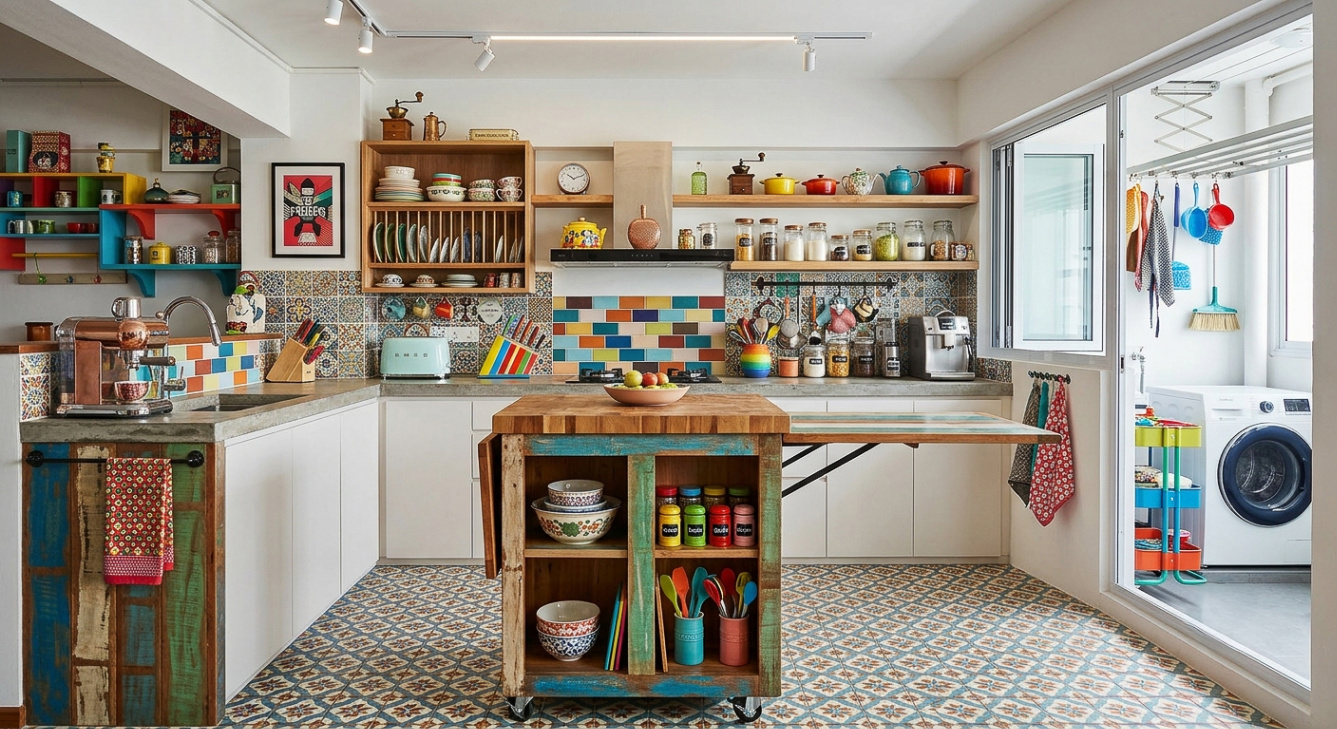
BTO flats as a blank canvas — neutral finishes in new BTO flats provide an ideal starting point for eclectic design, since the plain backdrop lets mismatched furniture stand out.
Condos and MCST guidelines — check management rules if you plan to hang heavy gallery walls or install custom shelving that involves drilling into shared walls. Most cosmetic changes within your unit won't need approval, but it's worth confirming for larger installations.
Cost Considerations for Eclectic Styling (2026)
Styling an existing room with vintage finds, a rug, and a gallery wall typically costs $2,500 to $6,000, depending on how many secondhand versus new pieces you use. A fuller room refresh with new furniture alongside vintage pieces runs $8,000 to $15,000. A full eclectic renovation, including custom joinery for display shelving and mixed lighting throughout the home, can reach $20,000 or more.
Home TypeRoom StylingFuller RefreshFull Renovation | |||
3-Room HDB | $2,000–$4,000 | $6,000–$9,000 | $14,000–$18,000 |
4-Room HDB | $2,500–$5,000 | $7,000–$11,000 | $16,000–$21,000 |
5-Room HDB | $3,000–$6,000 | $8,000–$13,000 | $18,000–$24,000 |
Condo (3-Bedroom) | $3,500–$7,000 | $9,000–$15,000 | $20,000–$28,000 |
Costs vary widely because eclectic design depends heavily on sourcing choices rather than a fixed material list.
Frequently Asked Questions
What is eclectic interior design and how does it work in Singapore homes? Eclectic interior design mixes furniture, colours, and eras into one cohesive room using a shared colour palette or material thread. It suits HDB flats and condos alike, especially for homeowners with vintage or travel finds to display.
How is eclectic design different from maximalist design? Maximalist design focuses on abundance and dense pattern layering, while eclectic design can be either busy or restrained. Eclectic style always relies on a unifying thread, such as colour or material, to keep the mix cohesive.
Can I create an eclectic look in a small HDB flat? Yes. Limit your eclectic mix to one or two rooms, use a neutral base for large surfaces, and choose a shared colour or material to tie mismatched pieces together without cluttering the space.
Where can I find furniture for an eclectic Singapore home? Local flea markets, estate sales, and online marketplaces are good sources for vintage and one-off pieces. Mixing these with a few new items keeps costs manageable.
Do vintage furniture pieces need special care in Singapore's climate? Yes. Check joints and finishes carefully before buying secondhand wood furniture, and consider a protective treatment to help older pieces withstand Singapore's humidity.
How much does eclectic interior styling cost in Singapore? Costs range from about $2,500 for styling an existing room with vintage finds to $20,000 or more for a full eclectic renovation with custom shelving and lighting.
Eclectic interior design offers a flexible, personal approach to decorating your home. By starting with a neutral base, choosing a unifying thread, and mixing pieces from different eras and sources, you can create a space that feels authentic, collected, and truly yours — without following rigid design rules or overspending on matching sets.
 Watch AD Unlock More
Advertisement


Advertisement


Advertisement


Advertisement