




Advertisement
Muji style interior design has become increasingly popular among Singapore homeowners seeking calm, functional living spaces. Rooted in Japanese minimalist philosophy, this aesthetic favours natural materials like oak, rattan, and linen over flashy finishes. It suits small HDB flats and condos equally well, offering a timeless alternative to passing trends.
This guide covers everything you need to know: the core principles, how to apply them room by room, Singapore-specific considerations, and realistic costs for 2026.
1. What Is Muji Style Interior Design?
Muji style borrows its name and ethos from the Japanese retailer Muji, short for "Mujirushi Ryohin" — no-brand quality goods. The philosophy favours simple, honest objects over branded statement pieces. A Muji-inspired home feels quiet, intentional, and lived-in rather than sterile.
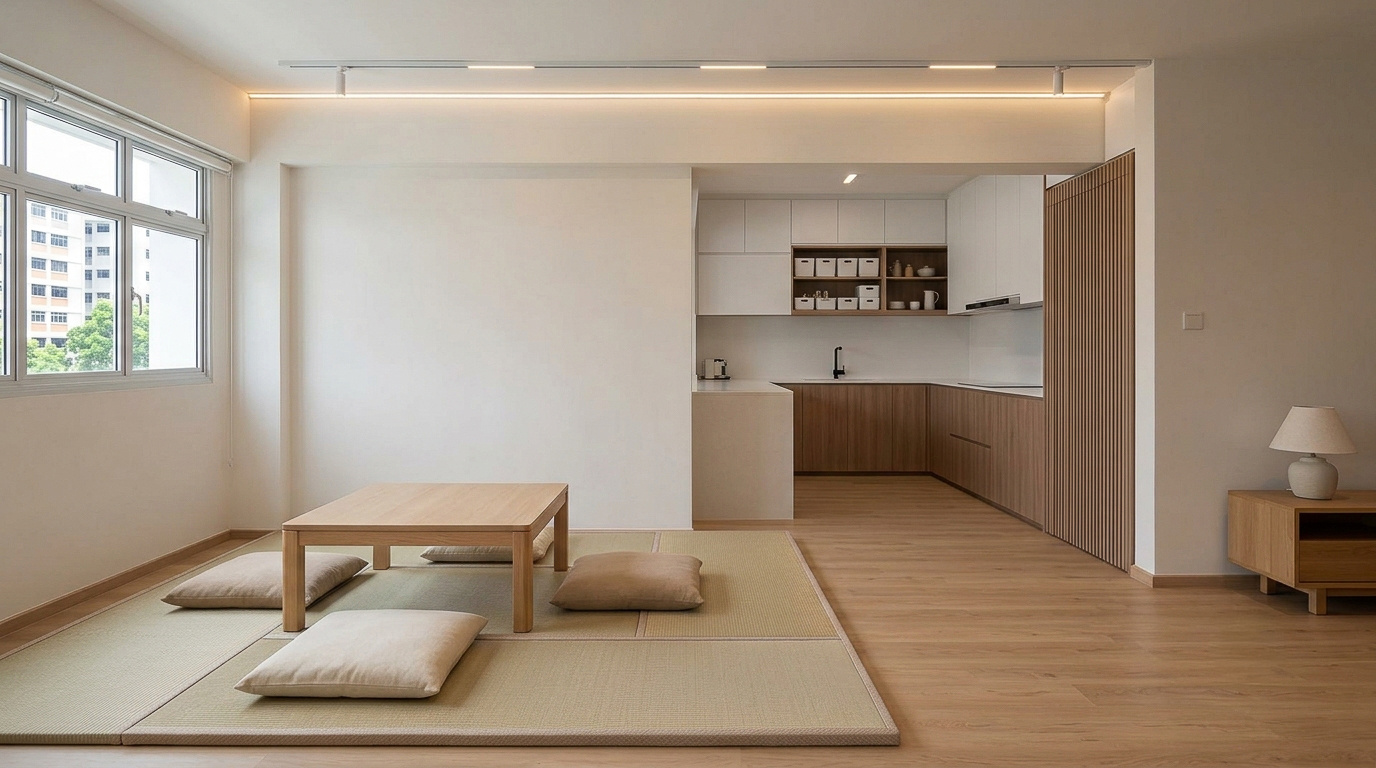
Unlike stark Scandinavian minimalism, Muji style leans warmer. It uses raw wood, woven textures, and soft linen instead of glossy white surfaces. The result is a space that ages gracefully and feels genuinely comfortable.
Key characteristics:
Natural materials first — oak, rattan, cotton, and linen dominate over laminate or high-gloss finishes
Neutral, earthy tones — beige, off-white, taupe, and soft grey reflect light well and make small rooms appear larger
Functional minimalism — every item earns its place through use, not decoration; storage stays hidden behind simple cabinet fronts
The "no-brand" philosophy — furniture is chosen for form and function, not brand prestige; budget and premium pieces mix seamlessly
Some describe this restraint using the Japanese concept of wabi-sabi — finding beauty in imperfection and natural ageing. A slightly uneven ceramic bowl or a linen cushion that wrinkles easily both fit this aesthetic perfectly.
2. How to Achieve Muji Style in Your Singapore Home
Achieving Muji style starts with editing, not buying. First, remove excess furniture and decorative clutter. Then, assess what genuinely earns a place in your layout.
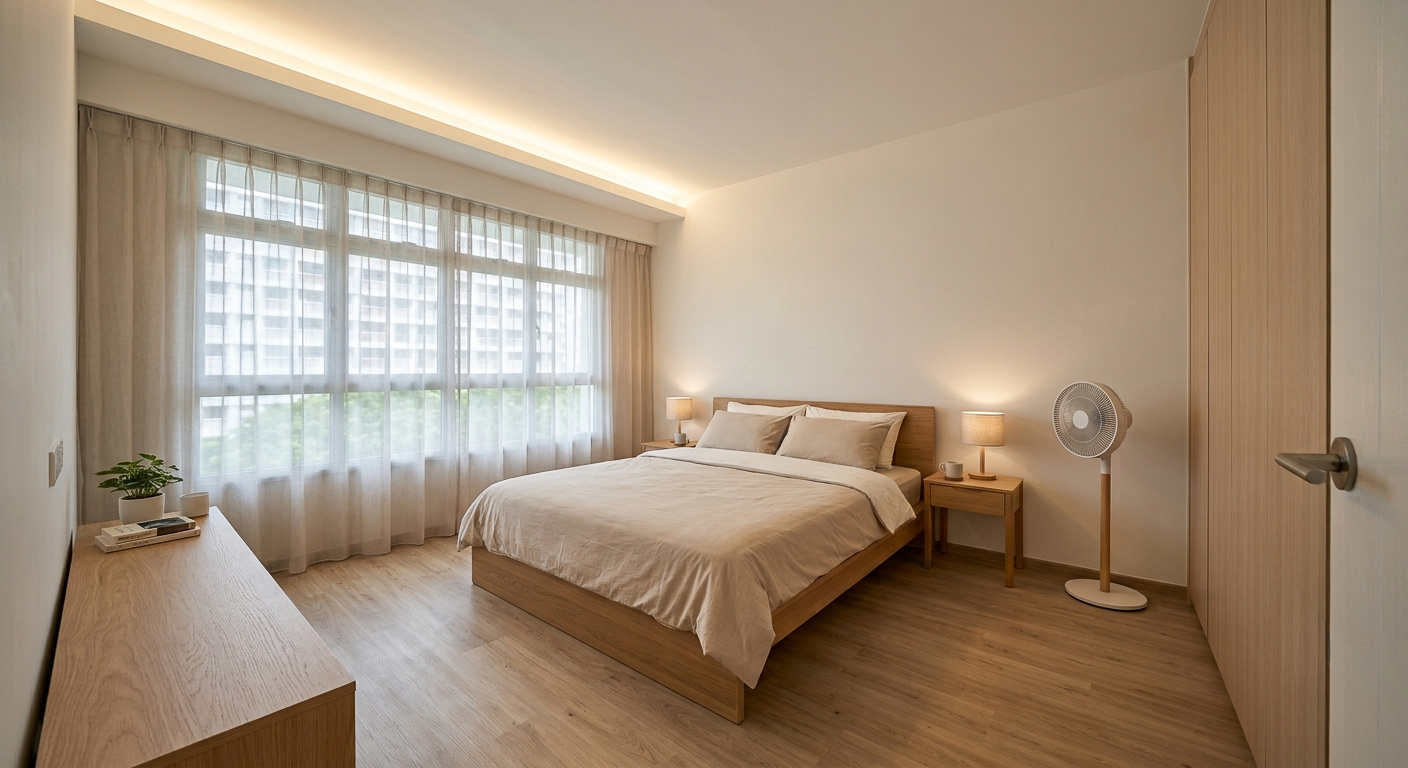
Standardise your colour palette across walls, flooring, and large furniture. Stick to two or three neutral tones throughout the home. This consistency makes small HDB flats feel cohesive rather than choppy.
Work with your existing layout instead of fighting it. Most 3-room to 5-room HDB flats already have straightforward, boxy rooms — this structure suits Muji style well.
Prioritise loose furniture — freestanding pieces like sofas and dining tables give you flexibility to rearrange or replace without renovation work. This suits renters and owners planning to upgrade later.
Invest in built-in storage during your renovation. Concealed carpentry keeps surfaces clear, which is central to the Muji look. For flooring, engineered wood offers the oak look at a lower cost with better humidity resistance than solid oak.
3. Key Elements: Colours, Materials, Furniture & Lighting
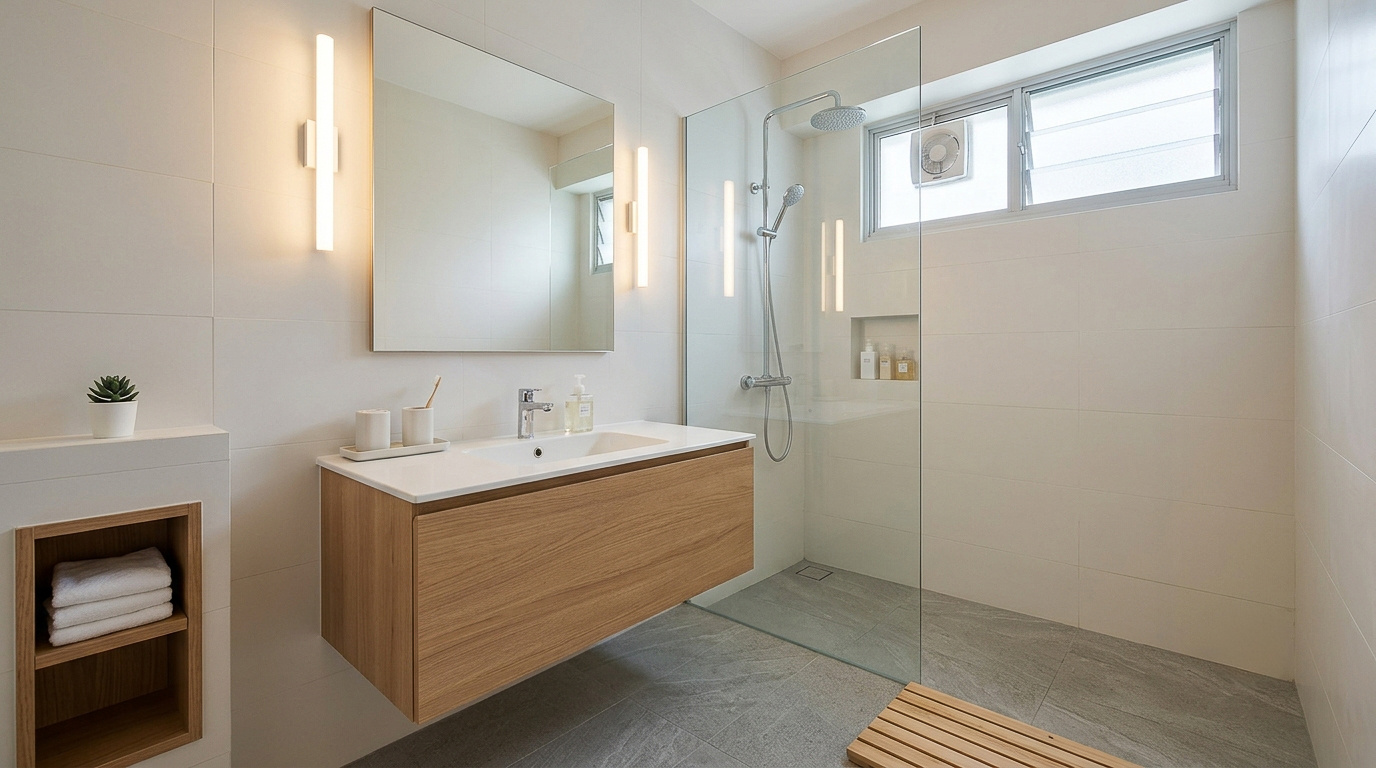
Four elements define the Muji style palette: colour, material, furniture form, and lighting quality.
Colours — Stick to a tonal palette rather than contrasting colours. Beige, taupe, oatmeal, and soft grey form the base, while sage green or muted terracotta can add gentle accents.
ElementRecommended TonesWhy It Works | ||
Wall & Ceiling | Off-white, warm beige, oatmeal | Reflects light, feels soft and calm |
Flooring | Light oak, taupe vinyl, natural stone-look tiles | Grounds the space without heaviness |
Furniture | Muted wood tones, unbleached cotton, sage green | Adds warmth without visual noise |
Textiles | Linen, undyed cotton, jute | Introduces texture while staying neutral |
Materials — Oak, rattan, and linen anchor the palette. Oak brings warmth to flooring and furniture. Rattan adds texture to chairs, lampshades, and storage baskets. Linen is used for cushions, curtains, and upholstery — it wrinkles easily but softens beautifully with use.
Furniture — Choose low-profile, unadorned pieces with visible natural grain. Modular sofas, simple dining tables, and open-frame shelving all support the Muji aesthetic. Avoid ornate legs, high-gloss finishes, or bold upholstery prints.
Lighting — Warm white LED lighting (2700K to 3000K) mimics natural daylight while staying soft. Paper or rattan pendant shades diffuse light gently. Layer ambient ceiling lights with table lamps for a cosy, functional glow.
4. Room-by-Room Muji Style Inspiration
3-Room HDB Flat — Use a single oak-toned console that doubles as TV unit and storage. Choose a fold-flat dining table to keep the space flexible. Keep the colour palette to two tones maximum.
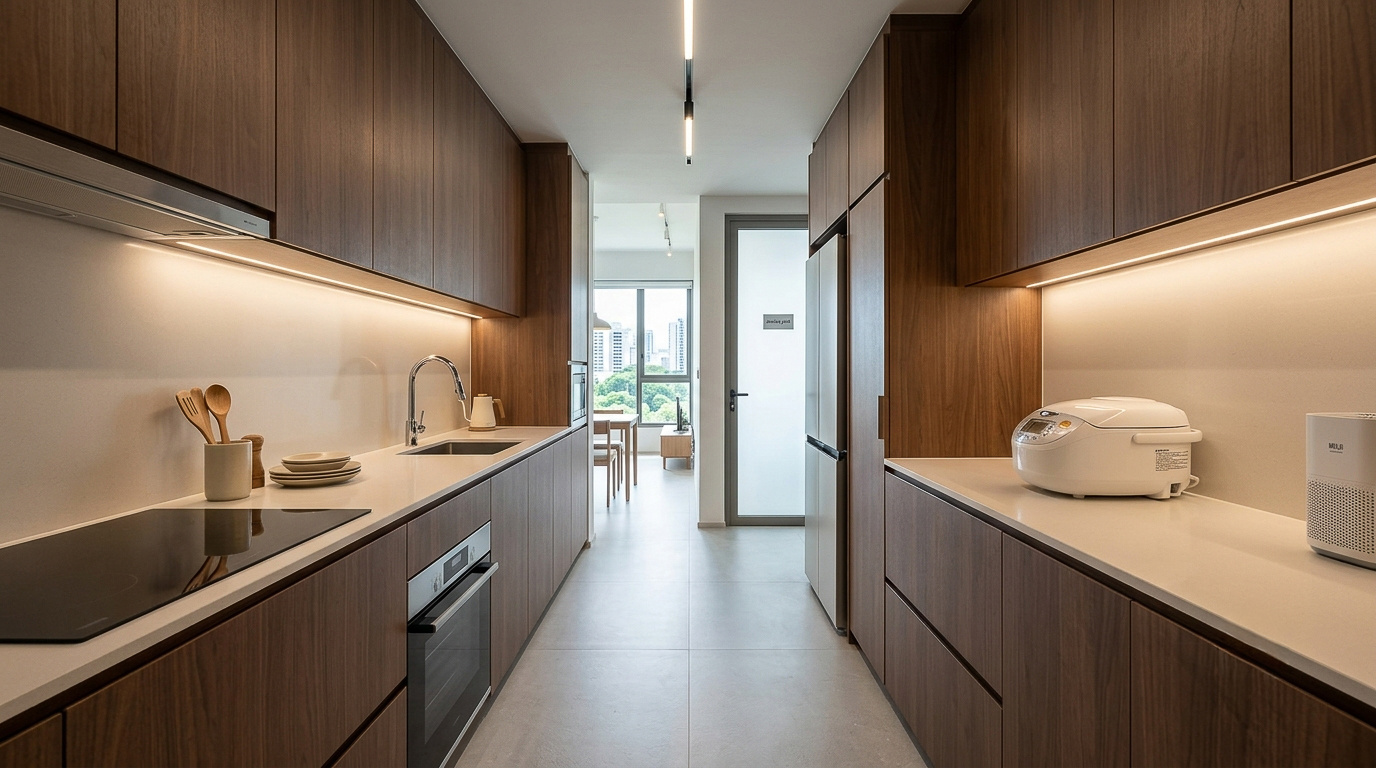
4-Room HDB Flat — Add a simple oak desk with rattan storage baskets underneath. In the living room, a low modular sofa in undyed cotton pairs well with a jute rug. Balance openness with defined zones.
5-Room HDB Flat — Support a dedicated reading corner or home office. Use linen curtains to soften larger windows. Consider a rattan room divider between living and dining areas instead of a solid wall.
Condo Unit — Built-in wardrobes and kitchen cabinetry often come pre-installed in darker finishes. Soften this with light oak furniture, linen soft furnishings, and warm lighting to bring the space back toward a Muji-inspired palette.
5. Singapore-Specific Considerations
Singapore's humid, tropical climate directly affects Muji style materials. Here's what to keep in mind:
Humidity and wood — Solid oak can expand, contract, or warp in humidity swings above 70%. Engineered wood resists this movement better and is recommended for Singapore flats.
Rattan care — Rattan can become brittle or mouldy without airflow. Place pieces away from direct aircon vents and wipe them down regularly.
Linen in the tropics — Linen breathes well in heat but absorbs moisture readily. Pair it with good ventilation or dehumidifiers in enclosed rooms.
Small-space optimisation — Most HDB layouts are compact. Built-in storage, foldable furniture, and light colours all help small rooms feel larger. Avoid overly deep furniture that blocks natural walkways.
6. Cost Considerations for Muji Style Interior Design (2026)
Budgeting depends heavily on flat size and scope. Partial makeovers using loose furniture cost far less than full carpentry overhauls.
Flat Type & ScopeEstimated Cost Range (SGD)What's Typically Included | ||
3-Room HDB (Partial) | $15,000 – $25,000 | Living & dining refresh, loose furniture, paint |
4-Room HDB (Full) | $35,000 – $50,000 | Carpentry, flooring, full furniture swap |
5-Room HDB (Full) | $45,000 – $65,000 | Extra rooms, built-in storage, lighting overhaul |
Condo Unit (Partial) | $20,000 – $40,000 | Furniture, soft furnishings, selective carpentry |
Costs rise quickly once custom carpentry, imported rattan, or full flooring replacement enters the scope. Start with paint, lighting, and loose furniture before committing to built-ins.
Frequently Asked Questions
Is Muji style suitable for small HDB flats? Yes, it suits small flats particularly well. The neutral palette and reduced clutter make rooms feel larger. Built-in, multi-purpose furniture helps compact layouts function efficiently.
Does rattan furniture survive Singapore's humidity? Rattan can last for years if placed away from direct aircon airflow and cleaned regularly. Poor ventilation increases the risk of mould or brittleness.
Should I use solid oak or engineered wood? Engineered wood is recommended in Singapore because it resists humidity-driven warping better than solid oak. It also achieves a similar natural look at a lower cost.
Can I apply Muji style to a rented condo? Yes, since the style relies heavily on loose furniture and soft furnishings rather than permanent structural changes. Linen curtains, rattan accessories, and neutral-toned furniture can transform a rented space reversibly.
Muji style interior design offers a timeless, practical approach to creating a calm and functional home in Singapore. By focusing on natural materials, neutral tones, and thoughtful storage, you can achieve a space that feels intentional and welcoming — without following fleeting trends. Start with the basics, prioritise quality over quantity, and let your home evolve naturally over time.
 Watch AD Unlock More
Advertisement


Advertisement


Advertisement


Advertisement