




Advertisement
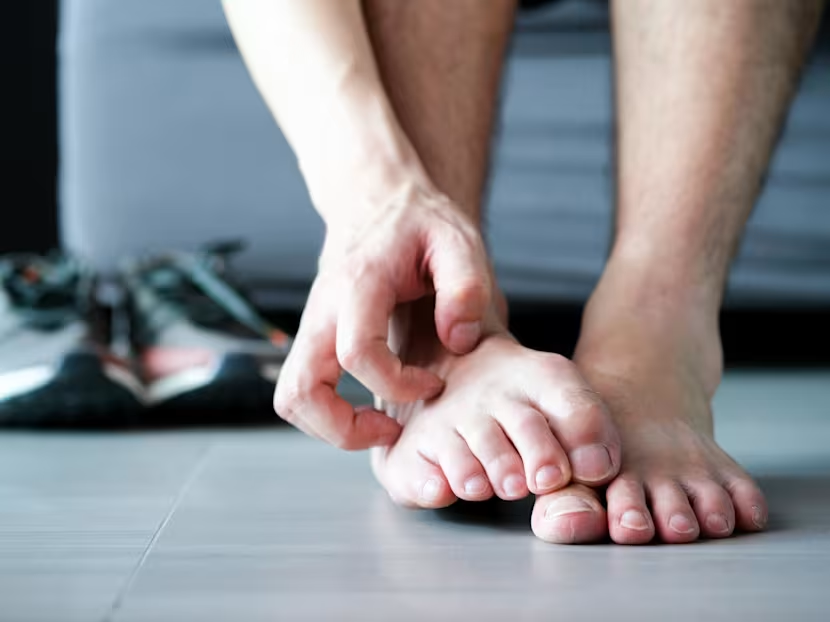
After completing National Service (NS) and swapping your boots for office shoes, you might think that the remnants of your army days are behind you. However, there’s one lingering issue that might follow you long after your operationally ready date (ORD) – athlete’s foot. The itchy, scaly, or cracked skin between your toes refuses to leave, no matter how much you air your feet or avoid barefoot surfaces. But why does athlete’s foot persist, and how can you finally clear it up?
How Common is Athlete’s Foot in Singapore?
Athlete’s foot, or tinea pedis, is a common fungal infection that affects many, including Singapore’s military personnel. According to a study by the National Skin Centre, athlete’s foot was the most frequent skin infection among patients between 1999 and 2003.
Dr Isabelle Yoong Rui Wen, a family physician at SingHealth Polyclinics, points out that tinea pedis accounted for more than one-quarter of fungal skin infections during that period. Despite the lack of more recent local data, cases of athlete’s foot are still frequently seen in clinics.
“On average, we see about two to three cases of athlete’s foot daily,” shares Nur Ashikin Ismail, a podiatrist at SingHealth Polyclinics. “And the number tends to rise during the hotter and more humid periods when people sweat more.”
According to Tan Tock Seng Hospital’s podiatrist Eunice Yang, the infection is more common among men, with the peak age of incidence being between 16 and 45 years old.
Why Does Athlete’s Foot Take So Long to Heal?
Athlete’s foot is caused by dermatophyte fungi, primarily Trichophyton rubrum, Trichophyton interdigitale, and Epidermophyton floccosum. These fungi are highly resilient and tough to treat. “The fungi’s cell walls contain mannans, which suppress the immune system and slow down the skin’s natural healing process,” says Eunice Yang.
Moreover, the infection often spreads to the toenails, where it can become a "reservoir" for fungi, creating a cycle of reinfection. Another common mistake people make is stopping antifungal medication too early, once the symptoms have subsided. “Stopping treatment prematurely allows the fungi to survive and come back stronger,” says Yang.
The Rise of Drug-Resistant Fungi
Some strains of fungi, such as Trichophyton indotineae, have evolved and become resistant to the usual antifungal treatments. Dr Yoong from SingHealth warns that these drug-resistant fungi behave similarly to superbugs, making them harder to treat. “This resistant strain has already been detected in Singapore, which means infections that look routine might be harder to clear,” she notes.
This resistance is often linked to the misuse of over-the-counter antifungal creams that combine antifungal medication with steroids. “While steroids may reduce itching and redness, they don’t kill the fungi. Instead, they mask symptoms, allowing the infection to persist and become resistant to treatment,” says Dr Yoong.
How Do You Know If You Have Athlete’s Foot?
Early symptoms of athlete’s foot include dry, flaky skin, itching, and small blisters. In more severe cases, the skin between the toes can crack and become soggy. Maceration (soft, whitish skin) between the toes is also a common sign of the infection, and it can lead to serious complications if left untreated.
“People with diabetes or compromised immune systems are at higher risk of developing infections, including more severe forms of cellulitis, which can even lead to amputation in extreme cases,” says Nur Ashikin.
When Should You See a Doctor?
For mild athlete’s foot, over-the-counter (OTC) treatments such as antifungal creams or powders can often help. However, if symptoms don’t improve after two weeks of treatment, it’s time to consult a doctor, especially if the rash spreads or becomes painful. Dr Yoong advises seeing a doctor if you have diabetes or a weakened immune system, or if the infection spreads beyond the feet.
Managing and Preventing Athlete’s Foot
Keeping your feet dry and clean is the most effective way to prevent athlete’s foot. Opt for breathable footwear like slippers or sandals, especially in hot and humid conditions. If you must wear closed-toe shoes, choose natural materials like leather over synthetic options. “Make sure to rotate shoes so they can dry out fully between uses,” advises Dr Yoong.
Additionally, it’s important to wash socks in hot water (at least 60°C) to kill any fungal spores, and change them daily or more often if they become sweaty. “Toe socks are a good option as they help reduce skin-to-skin moisture,” says Nur Ashikin.


Advertisement


Advertisement


Advertisement


Advertisement


