




Advertisement
Protein has made its way into seemingly everything, from popcorn to pasta, and now even your salad greens are getting a boost. So-called “protein greens” aren’t a special new type of lettuce or something that has been artificially infused. Instead, these salad blends are made with greens that naturally contain more protein. So, is swapping your usual romaine or spring mix for one of these specialty blends actually worthwhile? We asked a registered dietitian how the two compare and how to add more protein to your salad regardless of the greens you choose.
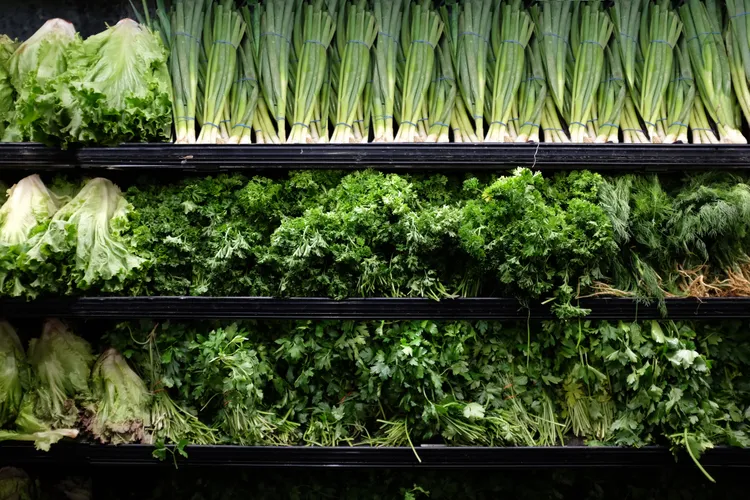
Should you buy “protein greens” instead of regular lettuce?
Even regular iceberg lettuce has a small amount of protein, but it usually isn’t something you’d count on as a major source. But newly circulating “protein greens” are making it possible to get more protein before you add a single topping to your salad.
“‘Protein greens’ are salad greens selected and blended to provide a bit more plant protein than your typical lettuce mix,” says Melanie Marcus, RD, registered dietitian and wellness and communications manager for Dole Food Company. “For example, a combination of sweet pea leaves with spinach, kale, bok choy, and other leafy greens could bump the protein up to about 5 grams for a whole 4.2-ounce container.”
You may not be familiar with sweet pea leaves, but they typically taste more mild and subtly sweet than bitter or peppery. They also have slightly more protein than typical lettuce because pea plants are legumes that readily convert absorbed nitrogen into amino acids, which are then used to build protein.
According to Marcus, these specialized mixes definitely have more protein than you’d get from the same amount of traditional lettuce, but she still thinks of these specialty products first and foremost as vegetables, not as your main protein source. “The real nutritional win is that you’re getting that protein along with fiber and a whole host of micronutrients,” she says.
So with that said, are “protein greens” worth it? Yes, if you have the right expectations. “I think protein greens are a fun way to squeeze a few extra grams of plant protein into a meal, but I wouldn’t buy them for the protein alone,” Marcus explains. “Five grams for an entire container is a nice bonus, but it’s still pretty modest in the context of a meal.”
Also, remember that protein isn’t the only reason most buyers choose one green over another; taste matters too. “If you enjoy the taste and variety, absolutely toss them in your cart,” says Marcus. “But if your goal is to make your salad meaningfully higher in protein, I’d choose whatever greens you actually like and focus on what you put on top. That’s where you can really move the needle.”
How to get more protein in your salad
If you’re looking to meaningfully boost the protein in your salad, Marcus again recommends focusing on toppings. These can bring your meal closer to the roughly 25 to 30 grams of protein often recommended per meal to support muscle growth. Here are a few of her favorite high-protein add-ons:
Topping | Protein content | Additional benefits |
Edamame (½ cup) | About 9 grams | Plus fiber |
Lentils (½ cup cooked) | About 9 grams | Fiber, iron, folate |
Chicken (3 oz cooked) | About 25 grams | Complete protein |
Salmon (3 oz cooked) | About 20 grams | Omega-3 fats |
Cottage cheese (½ cup) | About 12–14 grams | Can serve as dressing base |
“The nice thing is you can mix and match,” says Marcus. “Even adding one of these can make a salad feel much more like a meal.”
Deciding to have your add-ons supply most of the protein also means you don’t have to ditch the lettuce you already like in pursuit of protein. If arugula or a basic spring mix gets you excited to eat a salad daily, which is a worthy goal, keep it and get your protein elsewhere. If a protein mix tastes great to you, then consider the added protein a perk rather than the point.
Key takeaways
Question | Answer |
What are protein greens? | Salad blends with greens that naturally contain more protein |
How much protein do they add? | About 5 grams per 4.2-ounce container |
Are they a main protein source? | No, they are still primarily vegetables |
Are they worth buying? | Yes, if you enjoy the taste and want a small protein boost |
What’s the best way to add protein? | Focus on toppings like edamame, lentils, chicken, salmon, cottage cheese |
Should you give up your favorite greens? | No, choose greens you enjoy and add protein on top |
Protein greens are a fun way to add a few extra grams of plant protein to your salad, but they shouldn’t be your main protein source. The real nutritional win comes from what you put on top. Focus on high-protein toppings like edamame, lentils, chicken, salmon, or cottage cheese, and keep the greens you actually enjoy eating. That way, you get the best of both worlds: a salad you love and a meal that keeps you full and satisfied.
 Watch AD Unlock More
Advertisement


Advertisement


Advertisement


Advertisement