




Advertisement
After the back, the knees are the second-most common site of chronic pain in the body. Many people will experience knee pain at some point in their lives — whether from injuries to cartilage and soft tissue as active younger adults, or from wear and tear as they age.
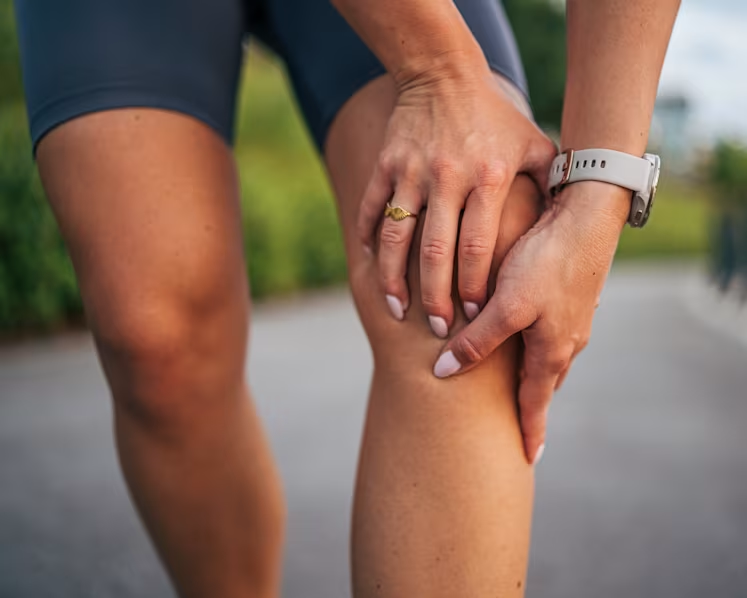
As your largest joint, your knees absorb force when you're playing sports, taking the stairs, or even getting into bed. That stress can wear down your joints and, if you already have an injury, lead to pain that can range from uncomfortable to debilitating. Chronic pain can be particularly draining — physically, financially and emotionally, says Dr Matthew Abdel, an orthopaedic surgeon at the Mayo Clinic. Someone might not say, "Hey, my knee's really killing me," he says. "But as they're talking to you about something totally unrelated, they're thinking about it."
Fortunately, there are steps you can take to manage discomfort, maintain mobility and prevent future injury. "You don't just necessarily go from 'my knee hurts' to having surgery," says Robert Turner, a physical therapist at the Hospital for Special Surgery in New York. Here's how to distinguish between common kinds of knee pain and what experts recommend for treating them.
Common causes of knee pain
The most common cause of chronic knee pain, particularly in adults 55 and older, is osteoarthritis. With this condition, the cartilage in your joints wears out and loses its ability to absorb shock. This leads to inflammation, occasional swelling and pain that generally worsens over time, though you may have good and bad days, says Dr Nicholas Scarcella, an orthopaedic surgeon at the Cleveland Clinic. That pain can be sharp or throbbing and can occur in different parts of the knee — along the sides or under the kneecap. People with osteoarthritis often feel stiffness in the morning, which generally eases later in the day.
Among physically active people, overuse injuries are also common. These are typically caused by suddenly increasing exercise intensity, duration or volume. Distance runners can be prone to IT band syndrome, which stems from repetitive movement and causes pain on the outside of the knee. Overuse, weak quad muscles, poor knee alignment and previous injuries can lead to patellofemoral pain syndrome (runner's knee), which causes pain underneath the kneecap.
Knee pain can also come on suddenly after a fall, accident, sports injury, or even bending over in the garden. One of the most common acute injuries is a meniscus tear — a tear in the crescent-shaped cartilage that absorbs shock and stabilises the knee. These are often caused by a twisting motion and can result in sharp pain, swelling and trouble bending the joint. "It tends to be an event that someone remembers," Dr Scarcella says.
Ligament sprains — particularly to the MCL and ACL — occur when one of the knee's four major ligaments stretches too far or tears. With an ACL tear, you may feel a pop.
Treating pain from overuse and arthritis
Even if your pain has appeared gradually, consider seeing a physical therapist. They can help identify movement patterns contributing to your knee pain — such as hip weakness or a tendency for your feet to collapse inward, Turner says. They can also determine if you should see a physician. (You can often see a physical therapist without a referral, but check your coverage with your provider in advance.)
Strengthening the muscles around the knee — both above (glutes, hip flexors, quads, hamstrings) and below (calves and ankle muscles) — is effective for reducing pain and preventing future aches. For patellofemoral pain, strengthening quads, hip abductors and core muscles, along with stretching quads, can help.
Exercise can also reduce pain from osteoarthritis and may be as effective as over-the-counter pain relievers. Lower-impact aerobic exercises — biking, swimming or using the elliptical — are good options if your usual routine is painful. Some studies show that taping and wearing supportive shoes may also help.
If lifestyle changes and oral medications aren't helping, doctors may recommend steroid injections, which can reduce pain for a few weeks at a time but are not recommended for frequent use, Dr Scarcella says. Evidence for hyaluronic acid injections is mixed, but some doctors say they can help patients with less advanced osteoarthritis for whom other treatments have failed. Platelet-rich plasma injections may be recommended for certain patients, but they can be expensive and haven't been shown to regenerate cartilage, says Dr Joanne Borg Stein, director of regenerative medicine at Mass General Brigham. If you've tried a range of treatments and pain still affects your quality of life, your doctor may recommend knee replacement surgery.
Treating acute injuries
For sudden injuries, Turner recommends stopping the activity that caused the pain and applying ice around the joint (rather than just the front). Over-the-counter pain relievers like ibuprofen or topical alternatives can help. Certain injuries — such as a torn ACL or meniscus — may require surgery in some patients.
You should see a doctor if your knee feels unstable, if you have sudden sharp shooting pain, can't manage stairs, or can't walk more than four steps without pain, Turner says. Don't ignore a fever (which can signal infection), pain that is worsening, directly over the bone, or keeping you up at night, says Dr Borg Stein.
How to keep your knees healthy
Many risk factors for knee pain are beyond our control — you can't change your age or genetics, Dr Abdel says. But maintaining a healthy body weight helps reduce the load on your knees. (Every step puts a load of two to three times your body weight on your knee.) Staying active is also important. Though it's a common misconception that some forms of exercise harm your knees, muscles weakened by inactivity can increase your risk of developing osteoarthritis later.
Even if you have arthritis, as long as you are flexible and strong, eat well and get adequate rest, "you're going to have much better function and reduced symptoms," Dr Borg Stein says. "So even if we can't totally prevent it, we can certainly manage it proactively."
Quick guide: When to see a doctor
Symptom | Action |
Knee feels unstable or gives way | See a doctor |
Sudden sharp shooting pain | See a doctor |
Can't manage stairs or walk >4 steps without pain | See a doctor |
Pain worsening, directly over bone, or waking you at night | See a doctor |
Fever with knee pain | Seek urgent care (possible infection) |
Mild pain from overuse | Rest, ice, OTC pain relief; see PT if persists |
The bottom line: Whether your knee pain is from osteoarthritis, overuse or a sudden injury, there are effective treatments available. Start with conservative approaches like physical therapy and strengthening exercises. If those don't help, talk to a doctor about injections or other options. And above all, stay active — protecting your knees doesn't mean keeping them still.
 Watch AD Unlock More
Advertisement


Advertisement


Advertisement


Advertisement