




Advertisement
When Ifah's daughter was seven, she became fascinated with her mother's beauty products. She would watch Ifah apply skincare and makeup each morning and ask for the same on her own face. "She even learned how to apply them herself – I had to hide my stash so she wouldn't keep using it," says the 37-year-old technical specialist. One of her friend's daughters, just eight years old, once showed Ifah how she does her makeup – complete with her own "Get Ready With Me" routine.
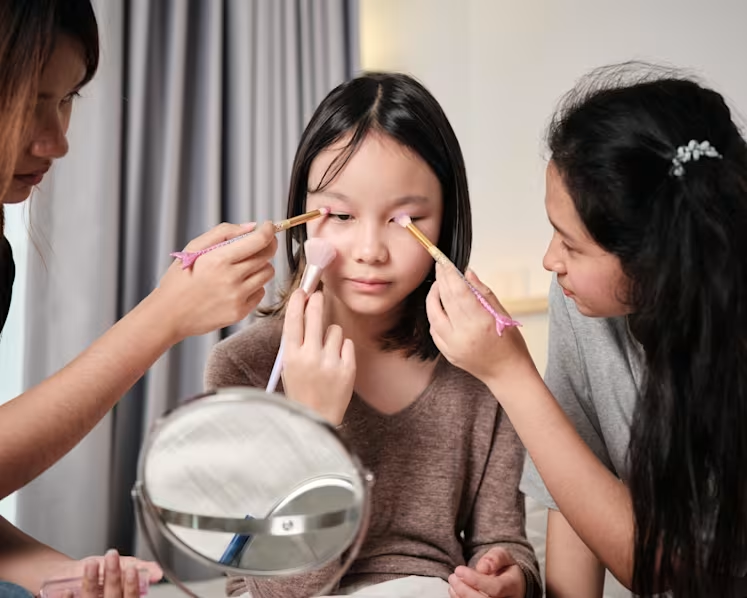
These young girls point to a growing trend known as cosmeticorexia – a blend of "cosmetic" and "anorexia" – used to describe an unhealthy obsession with achieving "flawless" skin that drives excessive, age-inappropriate use of cosmetics.
What is cosmeticorexia?
Dr Lynn Chiam, a dermatologist at the Children & Adult Skin Hair Laser Clinic at Mount Elizabeth Novena Hospital, explains that cosmeticorexia is an umbrella term for compulsive beauty behaviour with both physical and psychological consequences. It can start with heightened awareness of skincare products and aesthetic procedures, and escalate to obsessive product use.
"Some of my patients include teenagers well-versed not only in the newest creams and serums but also in lasers, energy-based devices and injectables," Dr Chiam says. Others fixate on viral beauty trends like "glass skin" without considering whether these products are suitable for young skin.
The concern goes beyond product knowledge. Some children become distressed if they miss a step in their multi-step routine; others constantly buy new products to address perceived flaws, sometimes leaving little money for lunch or school supplies. "Often, these young girls fixate on tiny blemishes and spend considerable effort and money to correct them," Dr Chiam adds. "To them, their appearance is central to their self-worth."
Why is it happening?
Social media plays a major role. Associate Professor Mark Koh from KK Women's and Children's Hospital notes that platforms aggressively market complex anti-ageing products to young girls. "Ingredients like retinoids, exfoliating acids, Vitamin C and heavily perfumed products are generally formulated for adult skin," he explains.
Dr Annabelle Chow of Annabelle Psychology says the core driver is a timeless need to fit in. "Kids' brains are still developing, so they're more impulsive and eager to impress their friends. The desire to look good becomes one of the ways they try to fit in," she says. Social norms also play a part – girls are exposed to more products and social cues about appearance from a young age.
Social media algorithms reinforce this exposure. Cheong Xinyi from KKH's Psychology Service says, "Unlike previous generations who saw beauty ideals mainly in magazines, young people today see beauty content continuously on Instagram or TikTok." The more they engage, the more similar content they encounter – shaping how they view themselves and what healthy, natural skin should look like.
The bigger picture
Lim Shoon Yin from AWARE sees this as more than a skincare trend. "When eight-year-olds are using retinol, we're not looking at vanity; we're looking at an industry that has found a way to sell insecurity earlier and earlier," she says. "This isn't just about skincare – it's about turning normal insecurities about growing up into problems that young people feel they desperately need to fix, when there's nothing wrong in the first place."
How parents can help
Experts agree that open conversation is key. Cheong advises using a child's interest in beauty as a starting point to talk about what they see online. "Listen without judgment and set clear boundaries on appropriate products. Use shared moments to teach digital literacy – help them understand how advertisers use filters and lighting to create unrealistic beauty standards."
"Most importantly, affirm your child for just being who they are, rather than how they look."
Dr Chow adds: "Talk to your girls about why they use beauty products – is it to feel better about themselves, or to hide perceived flaws? The distinction is important; it can affect the way they see themselves."
For Ifah, keeping that conversation open has meant allowing her daughter, now nine, to explore skincare safely – with guidance. "Most importantly, I remind her how beautiful I believe she is on the inside," she says.
 Watch AD Unlock More
Advertisement


Advertisement


Advertisement


Advertisement