




Advertisement
Every year brings a fresh wave of design trends. But in Singapore's compact, tropical homes, not every global trend translates well. Some look stunning on Pinterest but feel completely out of place in a 700 sq ft condo. Others add real value, comfort, and longevity — without breaking the bank.
This guide cuts through the noise. Here's what's genuinely popular among Singapore homeowners in 2026, and more importantly, what's worth spending your renovation budget on.
Why 2026 Feels Different
After years of stark minimalism — remember the all-white-everything phase? — Singapore homeowners are shifting toward spaces that feel warmer, more personal, and genuinely functional. The post-pandemic desire for a "sanctuary at home" has settled into a longer-term mindset: people want homes that are calm, practical, and unmistakably theirs.
Here's what that looks like in practice.
Trend 1: Japandi — Still Strong, But Done Better Now
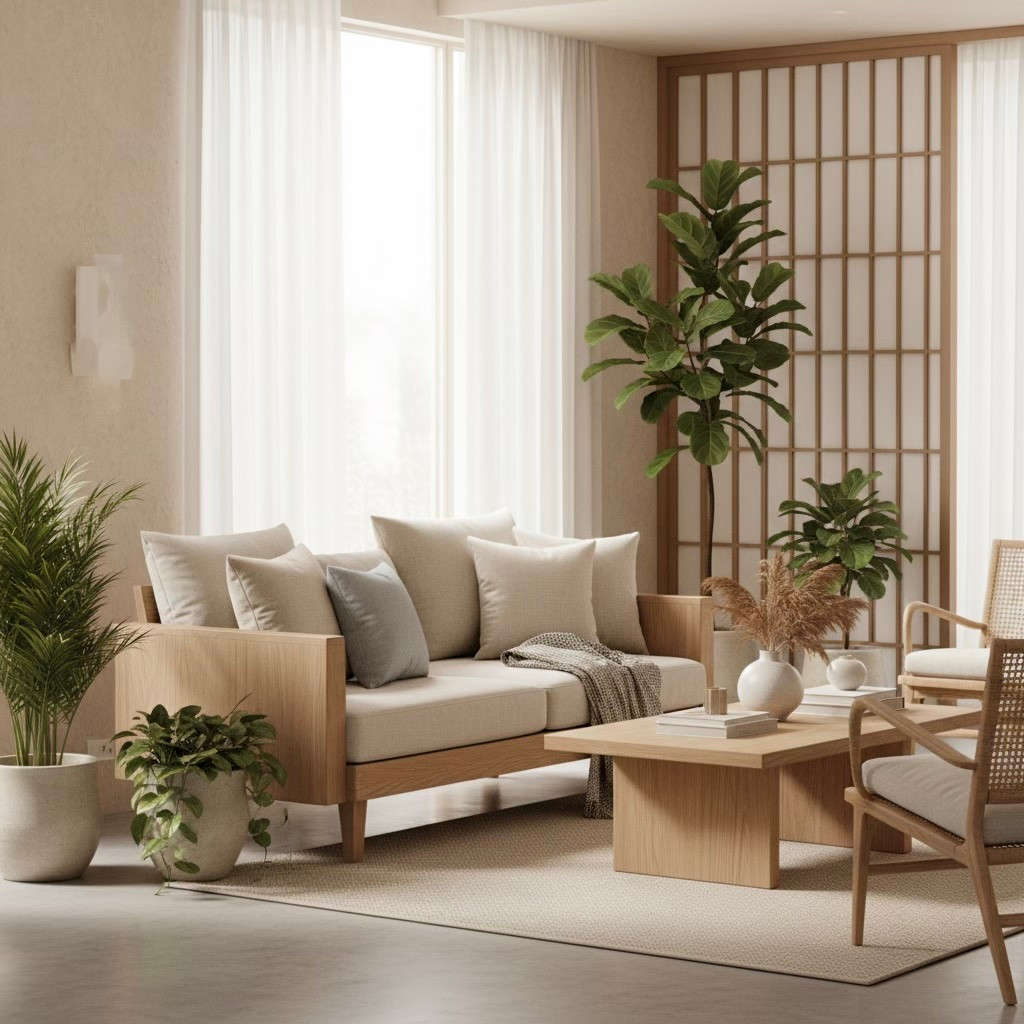
Japandi (Japanese-Scandinavian fusion) dominated 2024–2025 and isn't going anywhere. But the execution has matured. The early wave of generic Japandi interiors — beige walls, light oak, a single plant — has given way to more intentional versions:
Layered textures: Linen, rattan, bouclé, and natural stone together, rather than a single "neutral" material
Wabi-sabi elements: Imperfect, handmade ceramics and furniture that shows its craftsmanship
Darker accents: Deep forest green, charcoal, and aged brass paired with warm neutrals
Functional minimalism: Storage that disappears completely, not just "decluttered" surfaces
Is it worth doing? Yes — especially for condo spaces where visual calm makes compact rooms feel larger. But hire a designer who's done it well, not one following a mood board.
Cost premium: Moderate. Natural materials (timber, stone, linen) cost more than laminate alternatives, but the result has far greater design longevity.
Trend 2: Biophilic Design — More Practical Than You Think
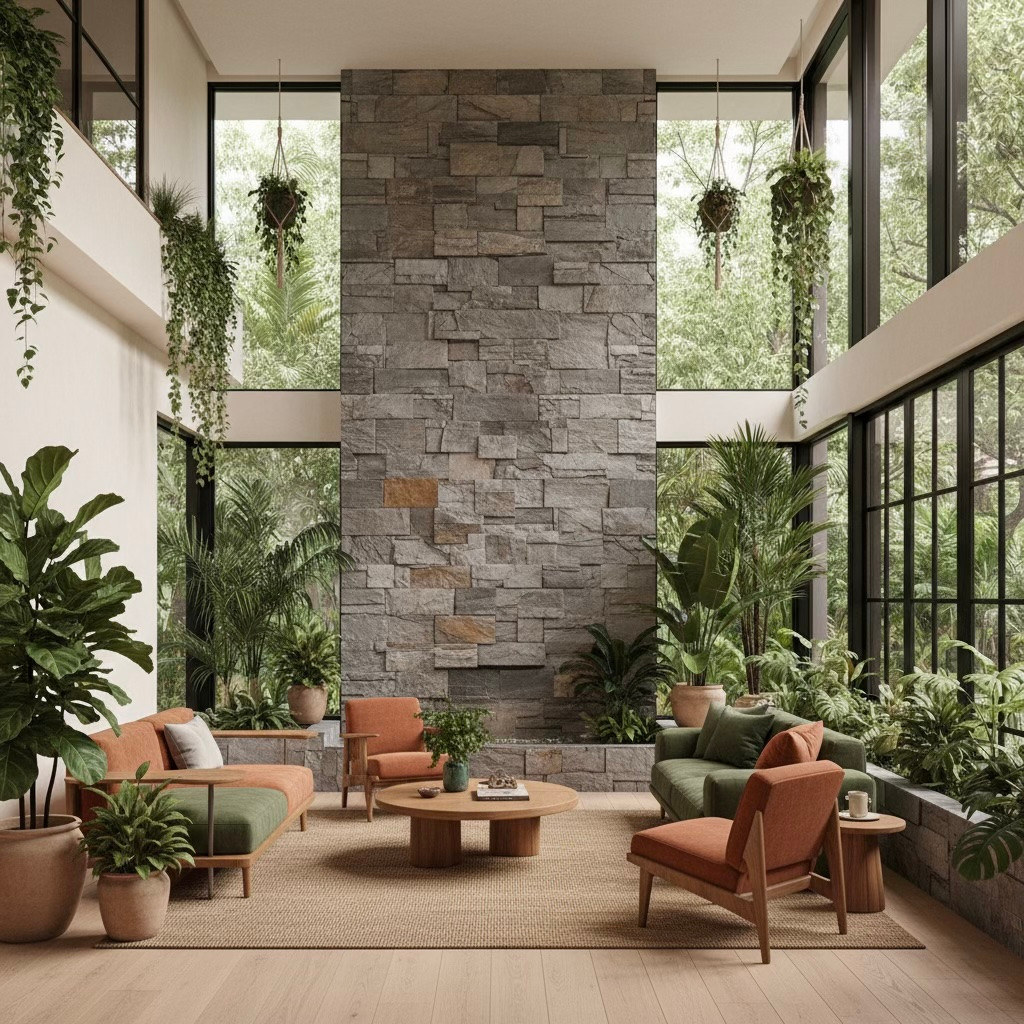
Bringing nature indoors has evolved from a design trend into a design philosophy. In 2026, biophilic design in Singapore homes includes:
Indoor plants — layered, varied greenery, not just a single fiddle-leaf fig
Natural stone surfaces — for kitchen counters and feature walls
Timber-look materials — engineered timber or quality vinyl plank, more practical than solid wood in our humidity
Maximised natural light — repositioning furniture layouts around light sources
Earthy, organic colour palettes — terracotta, clay, sage, sand
Is it worth doing? Absolutely. Natural elements improve wellbeing and are proven to make spaces feel larger. The ROI on resale value is also positive — buyers respond well to natural material finishes.
Practical note for Singapore: True biophilic design requires plants that survive our humidity and lower indoor light levels. Ask your designer for species recommendations specific to our climate — pothos, snake plants, and ZZ plants perform particularly well.
Trend 3: Curves and Soft Forms
The sharp-edged, angular interiors of the 2010s are out. 2026 embraces:
Rounded sofas and lounge chairs — cloud-like, low-profile forms
Arched doorways and niches — especially in feature walls and bedroom entries
Curved kitchen islands — for larger condos and landed properties
Soft-edged built-ins — wardrobes and TV consoles with rounded corners
Is it worth doing? Yes for key statement pieces — a curved sofa, an arched niche. But avoid over-committing. Too many curves in a small space creates visual noise.
Cost consideration: Curved millwork costs 20–35% more than straight-edged equivalents. Budget accordingly.
Trend 4: Moody, Layered Colour
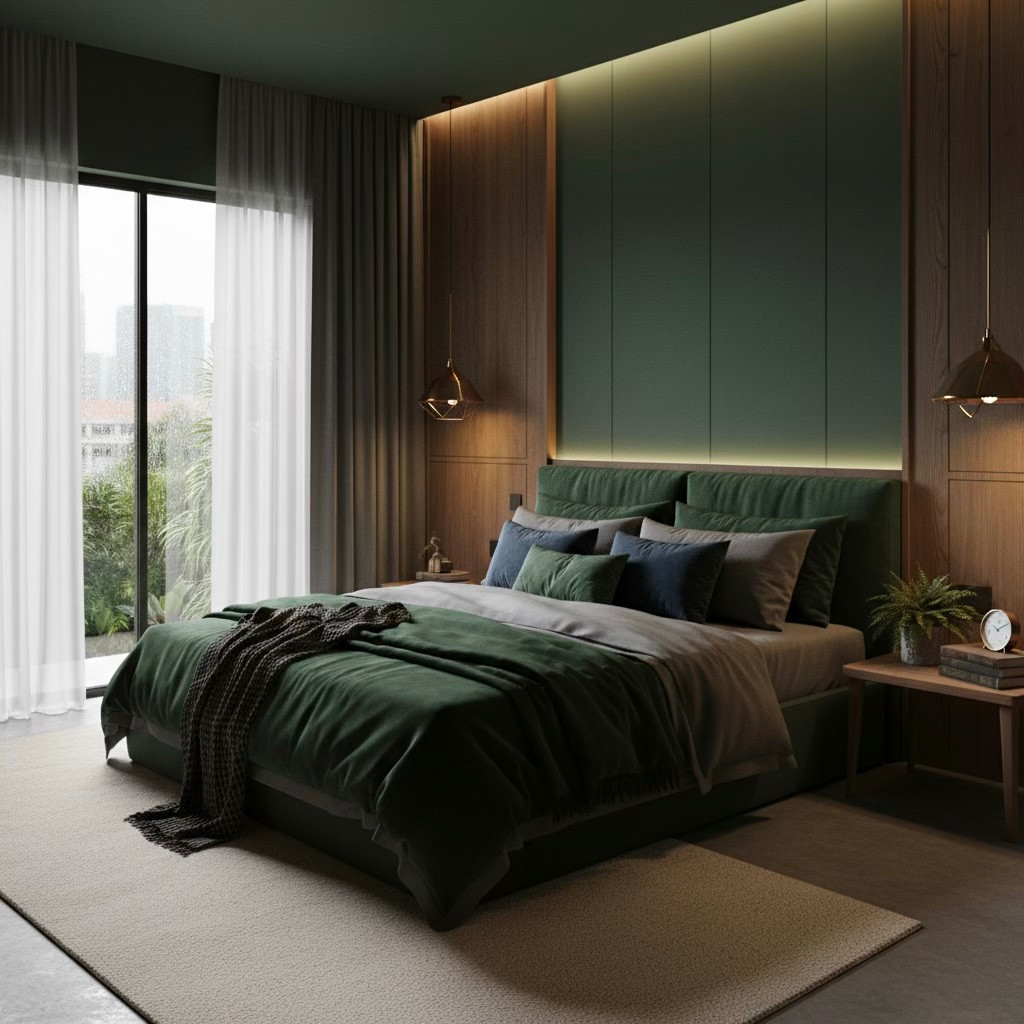
Singapore interiors are getting darker — in a good way. Deep colours that once felt intimidating in small spaces are now being used more confidently:
Deep greens — forest, sage, hunter — especially in bedrooms and feature walls
Warm terracotta and clay tones — replacing the cooler greys of previous years
Rich charcoal and near-black — used sparingly as accents rather than full-room
Warm brass and aged gold hardware — replacing cold chrome and brushed nickel
Is it worth doing? Yes — a moody feature wall or dark-coloured joinery adds depth and sophistication without a full renovation. This is a high-impact, relatively low-cost update.
Singapore-specific note: Our bright tropical light means dark colours don't feel as oppressive as they might in Northern European apartments. A deep green bedroom wall reads beautifully with our natural light levels.
Trend 5: Smart Home Integration Done Right
Smart home features have moved from novelty to expectation among Singapore homeowners. The 2026 version is less about gadgets and more about seamless integration:
Smart lighting — scene-setting, voice control, motion sensors — budget $800–$2,000 for a full system
Motorised curtains and blinds — practical for Singapore's east-west sun exposure
Video doorbell and smart lock — increasingly standard in resale renovations
Smart air-conditioning control — especially valuable given our year-round cooling needs
Is it worth doing? Yes — but plan it before work starts. Smart switches and wiring need to be factored into electrical works. Retrofitting after tiling is expensive and disruptive.
Cost range: Basic smart home package: $1,500–$3,000. Comprehensive whole-unit system: $5,000–$10,000.
What's Fading Out in 2026
❌ All-white interiors — too cold, shows every mark and scuff
❌ Faux brick accent walls — looks dated and overused
❌ Open-concept everything — Singaporeans are rediscovering the value of defined spaces and privacy
❌ Matching furniture sets — curated, layered looks are preferred over "showroom sets"
❌ Overly industrial styles — exposed pipes, bare concrete — have moved on
How to Apply These Trends Without Overspending
Neutralise your base first. Paint and flooring establish the canvas. Splurge on the materials that touch you daily — flooring, upholstery, kitchen surfaces — and save on what's hidden — ceiling finishes, secondary storage.
Choose one hero trend per room. A curved sofa in the living room. A Japandi-inspired wardrobe in the master bedroom. Biophilic elements in the kitchen. Trying to incorporate all trends in every room creates visual chaos and dilutes impact.
Invest in longevity, not fashion. The best interiors age well. Natural materials, quality joinery, and timeless forms outlast trends. Work with a designer who can distinguish between "what's popular now" and "what will still look good in 10 years."
Frequently Asked Questions
Do I need an interior designer to achieve these looks? Not necessarily. For straightforward renovations with clear style direction, a good contractor and a clear brief can achieve most of these looks. An interior designer adds value when you need spatial planning, custom millwork design, or project management for complex scopes.
Which trends work best for smaller Singapore condos (under 700 sq ft)? Japandi and biophilic design both work exceptionally well in compact spaces — they emphasise quality over quantity. Avoid heavy curves and very dark colour palettes in smaller units, as they can reduce the sense of space.
Are these trends available at all budget levels? Yes. A Japandi-inspired bedroom can be achieved for $8,000–$12,000 or $25,000+, depending on material choices. The trend is in the design language, not the price tag. Work with your designer to scale the look to your budget without compromising the overall aesthetic.
 Watch AD Unlock More
Advertisement


Advertisement


Advertisement


Advertisement