




Advertisement
Your knees are among the hardest-working joints in your body. They don't just support your weight — they also absorb the impact of every step you take, which studies show is about 2.5 to 2.8 times your body weight. When you run, that force increases to six to eight times your body weight, with each leg bearing the load around 500 to 700 times for every mile you run.
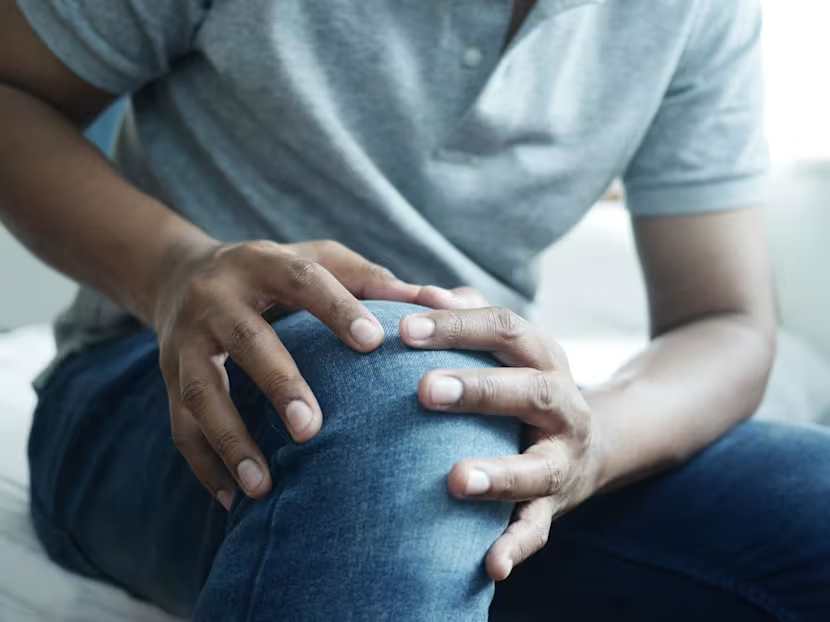
Unfortunately, we don't always make it easy on our knees. Weight gain is one of the most common ways we add to their load: for every additional kilogram gained, the pressure on the knees increases by around four times. And that's not including the punishing movements we put them through — pivoting, sudden changes in direction — common in sports like football, basketball, and increasingly in CrossFit and Hyrox events, says Dr Francis Wong Keng Lin, an orthopaedic surgeon-scientist at Oxford Cartilage & Sports Centre.
You don't have to be sporty to have heard of meniscus injuries or tears in the ACL or MCL. And age doesn't spare you either. "We see meniscus tears in everyone — from young athletes to middle-aged active adults and even elderly patients," says Dr Wong.
The Anatomy of the Knee
Each knee has two menisci and four major stabilising ligaments, explains Adjunct Assistant Professor Wang Ming, a consultant at Alexandra Hospital and National University Hospital. The two menisci are the shock absorbers, located on the inner and outer sides of the knee. These crescent-shaped structures sit between the femur and tibia. Without healthy menisci, forces become concentrated over a small area, increasing the risk of cartilage damage and osteoarthritis.
Don't confuse the meniscus with the kneecap, Adj Asst Prof Wang highlights. The kneecap is a small bone at the front of the knee that acts as a pulley to straighten it. The menisci, by contrast, are deep within the joint, functioning primarily as shock absorbers and load distributors.
The four ligaments — ACL, PCL, MCL, and LCL — are rigid bands of collagen tissue connecting the femur to the tibia. The ACL prevents excessive forward movement of the tibia and controls rotational movements. The MCL stabilises the knee against inward forces, while the LCL and PCL stabilise the outer knee and the back of the joint, respectively.
How the Knee Gets Injured
Meniscus injuries are the most common, says Dr Wong. "The meniscus acts as the knee's shock absorber and can be injured acutely during sports or gradually through age-related wear and tear. It also stabilises the knee when other structures are compromised."
Acute meniscus tears during sports are usually caused by twisting, especially when the knee is flexed and the foot is planted, says Adj Asst Prof Wang. Signs include pain along the joint line and swelling over 24 to 48 hours. There may also be catching, locking, or clicking. The trouble is, some patients may continue their activity before symptoms intensify, worsening the injury.
Most ACL injuries occur without direct contact, arising from sudden changes in direction, pivoting, rapid deceleration, or awkward landings. You'll know something is wrong when you hear a "pop," feel immediate swelling, and sense instability after a twisting injury.
Degenerative meniscus tears present more gradually, with intermittent aching, stiffness, or swelling over time, often aggravated by squatting, kneeling, or prolonged walking.
MCL injuries occur when a force pushes the knee inward, overstretching or spraining the ligament. The good news: most MCL injuries heal without surgery, says Dr Wong, though bracing and close attention are often needed.
Sometimes all three injuries occur together — the "unhappy triad" — due to a valgus and rotation injury. First, the ACL tears, leading to instability. The MCL follows, and the meniscus, trying to stabilise, eventually tears too. This causes intense pain and instability, and the patient is usually unable to walk.
Are You Safe If You Don't Play Sports?
Not entirely. Slipping on a wet floor, missing a step on stairs, tripping, or twisting the knee while carrying heavy objects can also cause injury. In older adults, meniscus tears can occur during low-energy activities like squatting, kneeling, or rising from a chair.
Why Early Treatment Matters
Early diagnosis can prevent minor injuries from becoming severe, lead to better outcomes, and may avoid surgery, says Dr Wong. "We often see patients who felt symptoms of a partial ACL or meniscus tear but continued sporting activities, leading to a full tear requiring surgery." Delayed treatment may result in tears becoming irreparable, requiring tissue removal instead.
See a doctor as soon as possible when you experience rapid swelling, inability to bear weight, instability, locking, or persistent pain that doesn't improve over several days.
When Surgery Is Needed — and When It's Not
Doctors assess instability, pain, imaging results (X-ray or MRI), and your athletic function to determine if surgery is needed, says Dr Chia Zi Yang from Singapore General Hospital. "Sedentary patients can be good candidates for non-surgical management, as ligaments and menisci can scar down and regain enough strength for daily activities."
Surgeons today focus on preserving rather than removing tissue. Meniscus tears are repaired with sutures using keyhole incisions. In selected patients, repairs may be combined with PRP or BMAC — regenerative therapies using the body's own healing properties.
For ACL injuries, surgery usually involves reconstructing the ligament using a tendon graft from the patient's hamstring or quadriceps. Most MCL injuries are treated without surgery, using bracing and rehabilitation.
Do Compression Sleeves and Patellar Bands Help?
The short answer: not much.
Knee compression sleeves may reduce mild pain and swelling but provide little stabilisation.
Patella braces and bands guide the kneecap or alter force distribution but do not protect against ACL, MCL, or meniscus injuries.
Kinesiology tape may improve proprioception and pain perception but offers no structural support.
"Current scientific evidence does not support the use of these products as effective methods to prevent ligamentous or meniscal injuries," says Adj Asst Prof Wang.
The Best Protection: Strong Muscles and Good Movement
The most effective protection comes from strong muscles, proper movement patterns, and timely treatment. "The best brace for the knee is a well-conditioned leg," says Dr Wong, summed up as strength, mobility, and balance. Build strong muscles, maintain a good range of motion, and develop dynamic control and body awareness. That's your best defence against knee injuries.
 Watch AD Unlock More
Advertisement


Advertisement


Advertisement


Advertisement